
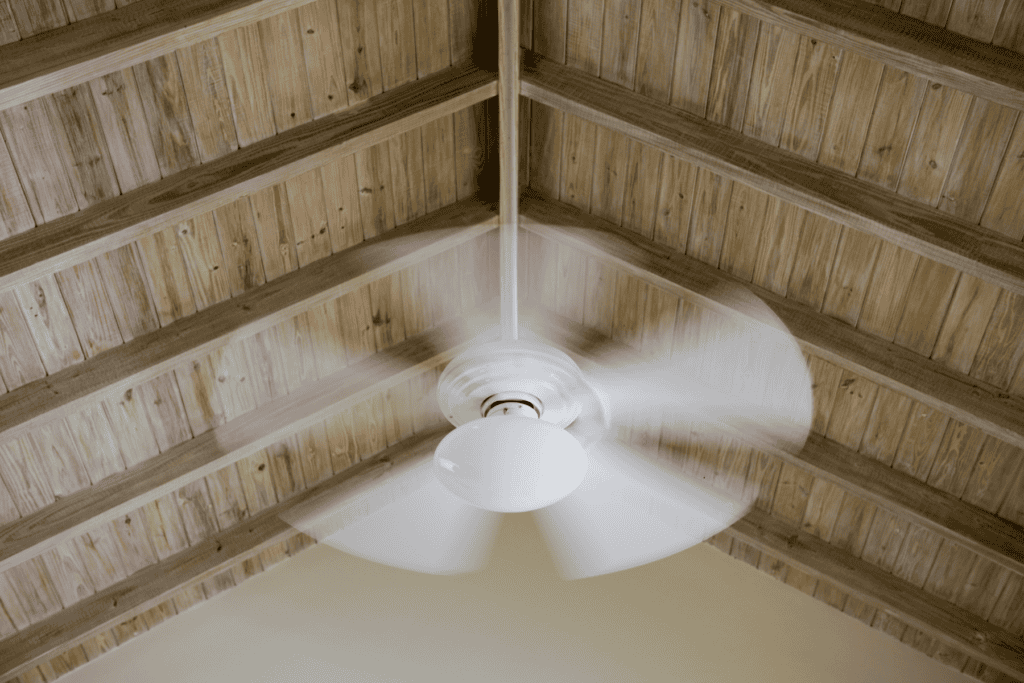
When cold temperatures settle across the Mid-Atlantic, setting the proper ceiling fan direction in winter can make a noticeable difference in how warm your home feels. For most homes, ceiling fan blades should rotate clockwise at their lowest speed setting during the colder months. This creates a gentle updraft. That motion pulls cool air upward and pushes trapped heat back down into the living area without generating a draft.
ENERGY STAR recommends this low, clockwise setting in winter because it creates a gentle updraft that moves warm air near the ceiling down into the living space.¹ TriState Home Services helps homeowners across Maryland, Virginia, West Virginia, and Pennsylvania maintain reliable comfort at home. Understanding how to set your ceiling fan correctly can help distribute warmed air more evenly throughout your living spaces. Better air circulation helps the warmth from your heating system reach the parts of the room you actually use.
How Ceiling Fan Direction in Winter Affects Warm Air Circulation
Ceiling fans don’t generate heat, but they can help balance room temperatures. Because heated air naturally rises toward the ceiling, living spaces often develop distinct layers of warm and cool air throughout the colder months. This thermal stratification leaves ceilings warm while floors remain chilly.
The Physics of Clockwise Rotation
When warm air from your heating system enters a room, it gathers near the ceiling where nobody can feel it. Running your fan on a low setting in a clockwise direction draws cooler air up from the floor level toward the center of the fan blades. This upward motion displaces the warm air pooled at the top of the room. As a result, warm air moves outward toward the walls and travels downward into the living space.
Choosing the right ceiling fan direction for winter keeps circulation gentle enough that you shouldn’t feel a strong breeze. Running the fan on high speed in winter can work against you, because faster blades create a breeze that makes the room feel cooler. That is why ENERGY STAR recommends a low speed for winter operation.¹
Comparing Winter Rotation to Warm-Weather Cooling
The standard ceiling fan direction in summer is counterclockwise. This pushes air downward and creates a wind-chill effect that makes people in the room feel cooler, even though the air temperature does not change.
In contrast, switching to the proper winter setting reverses this airflow dynamic entirely. The clockwise updraft moves air along the ceiling and down the walls instead of blowing directly on people seated in the room. The result is more even warmth from floor to ceiling.
Which Way Should a Ceiling Fan Turn in Winter?
Determining your ceiling fan’s rotation requires only a quick look from beneath the fixture. Taking a few moments to confirm the ceiling fan winter setting before freezing weather arrives helps keep your home comfortable throughout the season. Depending on the model, you can usually change direction with a switch on the motor housing, a remote, or a wall control.
How to Check and Change Fan Rotation
Checking and changing the direction only takes a minute. Follow this simple checklist to verify and set your blades for the colder months:
- Stand directly beneath the fan while it runs on low to confirm the blades turn clockwise.
- Turn off the fan and wait for the blades to stop completely before adjusting any controls.
- Locate the directional control, which may be a directional switch on the motor housing, a setting on a handheld remote, or a button on a wall control.
- Change the rotation control and switch the fan back on at its lowest speed setting to confirm the new rotation.
After switching, stand underneath the fixture for a moment to evaluate the airflow. You should feel subtle, gentle circulation around the room’s perimeter rather than direct air blowing downward. If you feel a noticeable downward breeze while standing under the fan, the blades are likely still rotating counterclockwise.
Ceiling Height Considerations
Room geometry also affects how effectively a fan moves air in winter. In rooms with standard eight-foot ceilings, a low clockwise speed is usually enough. In rooms with vaulted or two-story cathedral ceilings, you may need to run the fan at medium speed so the updraft reaches and displaces air trapped at the highest peaks. Checking the winter ceiling fan direction in each room can help heat feel more even throughout the house.
When Fan Adjustments Are Not Enough for Cold Rooms
Adjusting the ceiling fan direction in winter can help distribute warm air, but a fan can’t fix underlying heating problems. If certain rooms remain chilly or drafty despite setting your fans correctly, your heating equipment or building envelope may have issues.
Simple Checks Before You Call a Technician
Before assuming your equipment has failed, a few simple checks can help narrow down the cause of uneven room temperatures. Start with the air filter, since a dirty filter restricts airflow and reduces how much warm air reaches your rooms. Make sure furniture, rugs, or drapes are not blocking supply and return vents. Check where your thermostat is located, because a thermostat near a drafty window or in direct sunlight can read the wrong temperature. Look for gaps around windows and doors that let cold air in, and if you have accessible ductwork in a basement or attic, look for sections that appear disconnected or damaged.
Professional Heating and Electrical Evaluations
When basic troubleshooting doesn’t resolve uneven temperatures, mechanical systems need professional attention. Persistent cold spots, fluctuating temperatures, or short-cycling can point to issues with your heating system, ductwork, or thermostat. Scheduling HVAC service in Frederick, MD, lets a technician inspect airflow, check how your furnace or heat pump is operating, and look for air-delivery problems.
If the system produces weak airflow, strange noises, or lukewarm air, professional HVAC repair can address the problem before the coldest weather arrives. If a ceiling fan hums loudly, wobbles, or won’t change direction, an electrician can safely inspect the fixture wiring, wall switches, and fan controls. TriState Home Services offers electrical services throughout the area for these and other home electrical needs.
Keeping Your Home Balanced and Warm
Setting the correct ceiling fan direction in winter is a simple step that helps your household stay comfortable during cold weather. By running your ceiling fan clockwise on a low speed, you gently redistribute heat gathered near the ceiling back into the areas where your family relaxes.
While this simple adjustment helps keep rooms comfortable, it works best alongside a well-maintained heating system. Regular filter changes, proper duct sealing, and seasonal inspections help your heating equipment deliver warm air effectively. If cold spots persist across your home, look beyond your ceiling fans to your primary heating and electrical equipment to keep your living space cozy and energy-efficient all season long.
Schedule Heating and Electrical Care with TriState Home Services
If adjusting your ceiling fans does not resolve cold spots or uneven temperatures in your home, professional technicians can identify the root cause. TriState Home Services provides comprehensive heating, cooling, and electrical solutions to homeowners throughout Maryland, Virginia, West Virginia, and Pennsylvania. Whether your furnace requires seasonal maintenance, your heat pump needs an inspection, or your home needs electrical troubleshooting, our experienced team delivers dependable workmanship. Contact TriState Home Services online today to schedule an appointment and keep your home warm and reliable all winter long.
Source
- U.S. Environmental Protection Agency, ENERGY STAR. Ceiling Fans.