
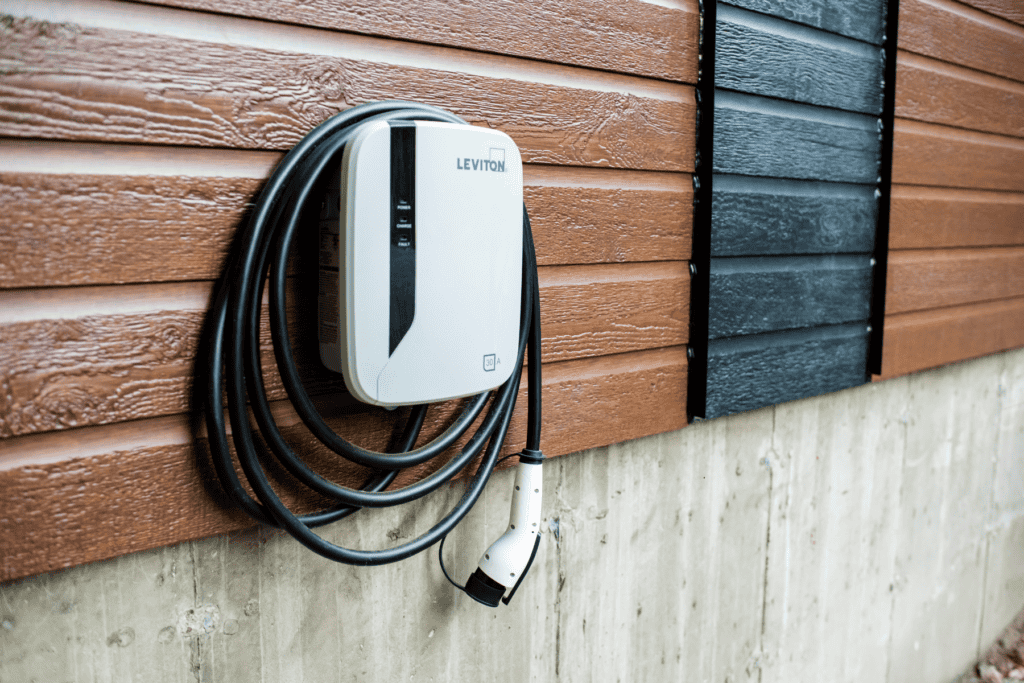
Bringing home an electric vehicle brings the convenience of charging right in your driveway or garage. Many homeowners want to understand what affects EV charger installation cost before scheduling a project. The total price typically includes both the charging equipment and professional electrical work, with costs varying based on panel capacity, wiring distance, installation location, and other electrical requirements.
Charging equipment falls into two primary residential categories. Standard Level 1 charging operates on a standard 120-volt household circuit at 12 to 16 amps. It delivers roughly 3 to 5 miles of driving range per hour of charging. In contrast, faster Level 2 charging operates on a dedicated 240-volt circuit drawing between 16 and 50 amps. This setup delivers 15 to 40 miles of range per hour. Preparing your property for Level 2 equipment requires evaluating your existing electrical service. It also helps ensure compliance with National Electrical Code safety standards. Understanding the required electrical services in Frederick, MD, will help you plan your project smoothly while keeping your home safe.
EV Charger Installation Cost: Equipment Expenses and Professional Labor
The cost to install an EV charger includes both charging equipment and professional electrical work, with the final price depending on the home’s existing electrical system. Homeowners usually purchase the charging station directly from a manufacturer or retailer. Experienced professionals handle the electrical wiring, circuit breaker additions, and physical mounting.
According to U.S. Department of Energy benchmarks, residential Level 2 charging units range from $350 to $900 for hardware alone. Professional labor typically adds $400 to $1,700 for a straightforward setup. More complex jobs may cost more depending on the home layout.
Charging Station Hardware Types
Charging equipment varies based on power output, cable length, connectivity, and charging features. Basic non-networked units focus primarily on dependable charging, while smart chargers can offer Wi-Fi connectivity, scheduling, energy monitoring, and other controls. Higher-output Level 2 equipment may require additional electrical capacity and more involved installation, so the charger selected can directly affect the overall Level 2 EV charger installation cost.
Hardwired Versus Plug-In Stations
Homeowners can choose between hardwiring a charging unit or mounting a heavy-duty NEMA 14-50 receptacle for a plug-in station. Hardwired configurations offer a permanent, weather-resistant connection. Under National Electrical Code guidelines, continuous loads require an electrical circuit rated for 125 percent of the draw. A 48-amp charger needs a dedicated 60-amp circuit, which mandates hardwiring. Hardwired units also eliminate the need for a separate ground-fault circuit interrupter breaker at the panel, which can reduce hardware expenses by $100 to $150.
Plug-in stations offer flexibility if you relocate. You can simply unplug the station and take it with you. However, plug-in models require an approved 240-volt outlet and a dedicated 40-amp or 50-amp circuit. Plug-in installations also require a GFCI breaker under recent electrical codes. These components can increase labor and hardware requirements during professional electrical installation.
Electrical and Structural Factors That Influence Pricing
Every home possesses unique physical and electrical characteristics. These details dictate the scope of work an electrician must complete. What starts as a simple job in one garage can become a complex project in another.
Key electrical and structural cost drivers include:
- Available capacity within your existing main electrical service panel to support an added 40-amp to 60-amp circuit.
- The distance between your electrical panel and the intended mounting location in the garage or on an exterior wall.
- Conduit route complexity, such as running wiring through finished drywall, attics, crawlspaces, or masonry.
- Outdoor installation demands, including weather-resistant NEMA 3R or NEMA 4 enclosures and underground trenching.
- Local municipality permitting and inspection fees, which typically range from $50 to $250 depending on local regulations.
These factors can significantly affect both installation time and overall project cost. A straightforward setup near an adequately sized electrical panel may require minimal additional work, while longer wiring runs, panel upgrades, exterior mounting, or permitting requirements can increase labor and material needs. An on-site evaluation helps determine the safest installation approach and provides a more accurate estimate for the property.
Panel Capacity, Service Upgrades, and Lower-Cost Alternatives
Your main panel must have sufficient electrical capacity to support continuous power demand. Many older homes operate on 100-amp or 150-amp electrical service. Heavy-draw appliances such as central A/C units and electric water heaters, common in properties serviced by plumbing in Frederick, MD, already consume substantial capacity.
When a home electrical panel lacks capacity, upgrading to a 200-amp service is a common solution. However, a full service upgrade represents a significant financial investment. Panel replacements and service heavy-ups generally cost between $1,800 and $4,500. This project requires new utility meter equipment, larger service entrance cables, and utility coordination.
Homeowners may have options other than upgrading the entire electrical service immediately. ENERGY STAR notes that smart circuit-sharing devices can sometimes allow an EV charger and another high-demand appliance to share available capacity by preventing them from operating simultaneously. Lower-amperage Level 2 charging may also reduce the additional electrical demand compared with higher-output equipment, although a professional load calculation is still needed. Level 1 charging may require no additional installation when a suitable dedicated 120-volt circuit is already available.
Wiring Distance and Routing Complexity
The physical distance between your charger and the electrical panel is another key cost driver. When the panel sits directly inside the garage near the parking bay, conduit runs stay under 15 feet. This simple layout keeps labor expenses low.
Conversely, when wiring must span 50 to 100 feet across finished ceilings, through basements, or underground to a detached garage, labor and material costs rise. Electricians use heavy copper conductors, such as 6 AWG or 4 AWG wire, to prevent voltage drop over long runs. Trenching for an underground run to a detached parking pad adds $15 to $30 per linear foot. Factoring these physical routes into your overall budget helps prevent unexpected installation expenses.
Planning Your Installation and Hiring an Electrician
Careful planning helps homeowners manage EV charger installation costs effectively. Assessing your daily driving habits and parking layout before hiring a contractor saves time and clarifies project requirements. Before an EV charging station installation, a licensed technician can evaluate your electrical service, review vehicle charge rates, and outline safe installation steps.
Assessing EV Charger Installation Requirements
Before scheduling an on-site visit, check where your vehicle charge port sits when parked in your regular spot. Charging cables typically measure between 18 and 25 feet. Selecting a central location prevents cable tension and reduces tripping hazards.
Your technician will inspect your panel, test grounding pathways, and complete an official National Electrical Code Article 220 load calculation. This calculation proves whether your home electrical system can safely accommodate the new continuous load without exceeding 80 percent of service capacity.
Working with a Qualified Professional
Working with a qualified EV charger electrician helps ensure the dedicated circuit, wiring, and charging equipment meet applicable electrical requirements. Our electrical company in Frederick, MD, ensures your dedicated circuit meets local building codes. Continuous high-current loads generate heat over many hours. Substandard connections or undersized wire gauges create real electrical fire hazards. Professional installation guarantees correct wire sizing, proper torque on breaker terminals, and valid manufacturer warranty coverage for your charging hardware. Certified contractors also manage local permit applications and coordinate required utility inspections to verify safety.
Preparing for Seamless Home Charging
Upgrading your home for dedicated vehicle charging makes everyday EV ownership simple and reliable. Calculating your total EV charger installation cost requires weighing hardware choices, wiring distance, and your electrical panel condition. While a full panel replacement is a major expense, budget-conscious options like lower-amperage chargers or smart circuit splitters deliver dependable power at a fraction of the cost.
Working with a licensed professional helps keep your electrical system safe and balanced. Just as routine maintenance supports an efficient home heating system or professional HVAC service in Frederick, MD, a properly configured charging circuit protects your electrical infrastructure. By evaluating your options early, local homeowners can secure dependable overnight charging for every trip.
Trust TriState Home Services for Your Electrical Needs
Ready to add a dedicated vehicle charger to your home? TriState Home Services has been in business since 1949, providing dependable heating, cooling, and electrical services across the surrounding area. Our experienced electricians evaluate your service panel, clearly explain your options, and install charging circuits that meet all safety standards. Local homeowners in Frederick can rely on our skilled team to handle permits, load calculations, and hardware mounting from start to finish. Reach out online today to schedule your home assessment and upgrade your charging setup with confidence.